

Luxury luggage has changed dramatically over the last decade. Once viewed as something purely functional, it has now become deeply tied to the way modern travellers move, work, and present themselves to the world. Today, the best premium luggage in India is no longer just about storage space or durability. It’s about experience, ease and how seamlessly a suitcase fits into the rhythm of your life.
You notice this shift most clearly at airports where some travellers still drag bulky, overstuffed bags with squeaky wheels and broken zippers while others glide through terminals with sleek hard shell luggage that feels almost architectural in its design. The difference isn’t only aesthetic, it’s behavioural, because better luggage changes the way travel feels.
This is exactly why searches around luxury luggage guide, best premium luggage India, and hard shell luggage comparison have grown significantly in recent years. Travellers today are asking smarter questions. Should you buy aluminium or polycarbonate luggage? Is zipperless luggage better? Does expensive luggage actually perform better over time? And perhaps most importantly, what kind of luggage genuinely fits the way you travel?
The answer depends on much more than price tags. It lies somewhere between engineering, material science, mobility, aesthetics, and personality.
Why Premium Luxury Luggage in India Is Rapidly Growing
India’s travel culture has evolved rapidly. A new generation of travellers now moves constantly between work, leisure, creativity, and global experiences. Young founders are flying weekly between cities, creators are building location-independent lifestyles, professionals are blending business trips with leisure travel and even younger consumers are beginning to prioritise design-led travel essentials over purely functional purchases.
As travel habits evolve, expectations from luggage evolve too.
Modern travellers are no longer satisfied with suitcases that simply “survive” airports. They want luggage that performs beautifully, with silent wheels, lightweight materials, better organisation, stronger security systems, and cleaner aesthetics. Increasingly, they also want luggage that reflects personal style in the same way a watch, sneaker, or pair of eyewear might.
This is why premium hard-shell luggage has become one of the fastest-growing segments in the travel category. Travellers are beginning to recognise the value of investing in luggage that improves movement, reduces stress, and elevates the overall travel experience.
And perhaps most importantly, luxury itself has changed. Earlier, luxury travel products relied heavily on loud branding. Today, the shift is towards something quieter and more intelligent. Products are expected to feel refined rather than flashy, design-forward rather than trend-driven and functional rather than ornamental. The best premium luggage brands understand this deeply.
What Actually Makes Luggage Feel Premium?
A luxury suitcase is rarely defined by logos alone. In fact, most genuinely premium luggage today looks surprisingly understated. The difference lies in how it behaves.
You notice it in the way the wheels move silently across airport floors. You notice it when the handle adjusts smoothly instead of jerking awkwardly into place. You notice it in the precision of the locking system, the sturdiness of the shell, and the way the interiors are organised thoughtfully enough to reduce friction while packing. Premium luggage is essentially industrial design disguised as travel gear.
The best brands spend enormous effort refining details most travellers don’t consciously think about like wheel engineering, material balance, weight distribution, shell construction, internal organisation, handle ergonomics, closure systems and storage efficiency
Good luggage stores your belongings but great luggage improves how you move through the world. This philosophy sits at the centre of modern luxury luggage design, especially among brands focused on engineering-led travel experiences rather than traditional mass manufacturing.
Aluminium vs Polycarbonate Suitcase: Understanding the Difference
If you’ve been researching premium luggage, you’ve likely encountered the two most dominant materials in modern hard shell luggage: aluminium and polycarbonate.
Both are excellent but they are designed for slightly different travel personalities and priorities. Understanding the difference is one of the most important parts of choosing the right suitcase.
Why Aluminium Luggage Has Become the Symbol of Quiet Luxury
Few materials communicate sophistication the way aluminium does. There’s a reason so many iconic luxury luggage designs rely on it. Aluminium feels architectural, precise, and intentional. It immediately creates a stronger visual and tactile presence compared to softer materials.
But aluminium luggage is not just about appearance. High-grade aluminium offers exceptional structural integrity, which makes it ideal for travellers who prioritise durability, security, and elevated design. It creates a suitcase that feels solid, composed, and remarkably premium in hand.
Collections like Navigo’s Primo and Elite are built around this philosophy of refined engineering and quiet confidence. What makes aluminium especially appealing is the way it ages. Unlike traditional luggage that looks worn out over time, aluminium develops character. Minor dents and marks become part of the journey rather than imperfections to hide. In fact, among seasoned travellers, this lived-in quality often becomes part of the appeal itself.
The material also allows for cleaner silhouettes and stronger zipperless constructions. This is why many luxury aluminium suitcases rely on TSA-approved clasp systems instead of conventional zippers. The result feels more secure, more seamless, and visually far more refined.
Aluminium luggage is often best suited for travellers who appreciate timeless products, thoughtful engineering, and understated luxury. These are travellers who care deeply about experience and details, even when those details are invisible to everyone else.
Why Polycarbonate Luggage Remains the Modern Favourite
While aluminium dominates the luxury conversation, polycarbonate has quietly become one of the most practical and versatile materials in premium luggage.
Modern polycarbonate luggage is lightweight, durable, impact-resistant, and significantly easier for frequent everyday travel. It offers an excellent balance between performance and usability, which is exactly why it remains so popular among frequent flyers and younger travellers.
Unlike aluminium, polycarbonate has a certain flexibility to it. Instead of denting under pressure, it absorbs impact more effectively, making it extremely resilient during rough airport handling. It’s also noticeably lighter, which matters enormously when you’re navigating crowded terminals, lifting cabin luggage, or travelling frequently.
Navigo’s Streamliner collection captures this balance particularly well, combining lightweight polycarbonate construction with sleek, modern aesthetics and zipperless engineering.
Polycarbonate also opens up more possibilities from a design perspective. Grooved shells, textured finishes, expressive colours, and lightweight silhouettes all become easier to achieve while maintaining durability.
For travellers who prioritise flexibility, movement, and everyday practicality without compromising on aesthetics, premium polycarbonate luggage often becomes the ideal choice.
Hard Shell Luggage Comparison: Which One Is Right for You?
The aluminium vs polycarbonate debate is less about which material is objectively superior and more about which travel experience you personally value more.
Aluminium luggage tends to appeal to travellers who prioritise structure, luxury, and long-term presence. It feels composed, elevated, and deeply intentional. Polycarbonate luggage, on the other hand, appeals to travellers who move constantly and want a suitcase that feels agile, lightweight, and versatile enough for every kind of trip.
A business traveller flying weekly for meetings may prefer the precision and front-opening accessibility of aluminium luggage like the Navigo Primo. Meanwhile, a modern frequent flyer balancing work trips, leisure travel, and short-haul flights may naturally gravitate towards something lightweight and adaptable like the Streamliner.
Both materials represent modern luxury in different ways.
Why Zipperless Luggage Is Becoming the New Premium Standard
One of the clearest signs of premium luggage today is the shift away from traditional zipper systems.
Luxury luggage brands are increasingly embracing zipperless construction because it improves both aesthetics and performance. Zipperless luggage creates cleaner silhouettes, stronger structural rigidity, and better long-term durability. It also offers a more refined user experience overall.
Most premium zipperless luggage uses TSA-approved anti-theft clasp systems that feel more secure and intentional than conventional zippers. The opening and closing experience itself becomes smoother and more satisfying.
Navigo has adopted zipperless engineering across several collections including Streamliner, Ace, Headliner, and Buddy.
Once travellers experience a well-designed zipperless suitcase, it becomes surprisingly difficult to return to ordinary luggage systems.
What Your Suitcase Actually Says About You
Luggage has become more personal than most people realise. The kind of suitcase you choose subtly reflects how you approach movement, travel, and even lifestyle itself.
Travellers drawn towards aluminium luggage often appreciate restraint, precision, and timeless design. They tend to prefer products that age gracefully and perform quietly rather than loudly demanding attention. These travellers are often highly detail-oriented and design-conscious, drawn towards architecture, minimalism, and elevated functionality.
Travellers who prefer premium polycarbonate luggage usually value agility and versatility. They move frequently, adapt quickly, and appreciate products that seamlessly fit into fast-moving lifestyles. Their approach to luxury tends to be lighter, more modern, and more dynamic.
Neither approach is better. They simply reflect different philosophies of travel. And increasingly, premium luggage brands are designing around these emotional behaviours rather than just material specifications.
The Rise of Design-Led Travel and Intelligent Mobility
One of the biggest shifts in luxury travel today is the growing importance of intelligent movement.
Travellers now care deeply about how efficiently products integrate into everyday life. This is why details like front-opening access, silent wheels, compression systems, spill-proof compartments, and telescopic handles matter so much more than they once did.
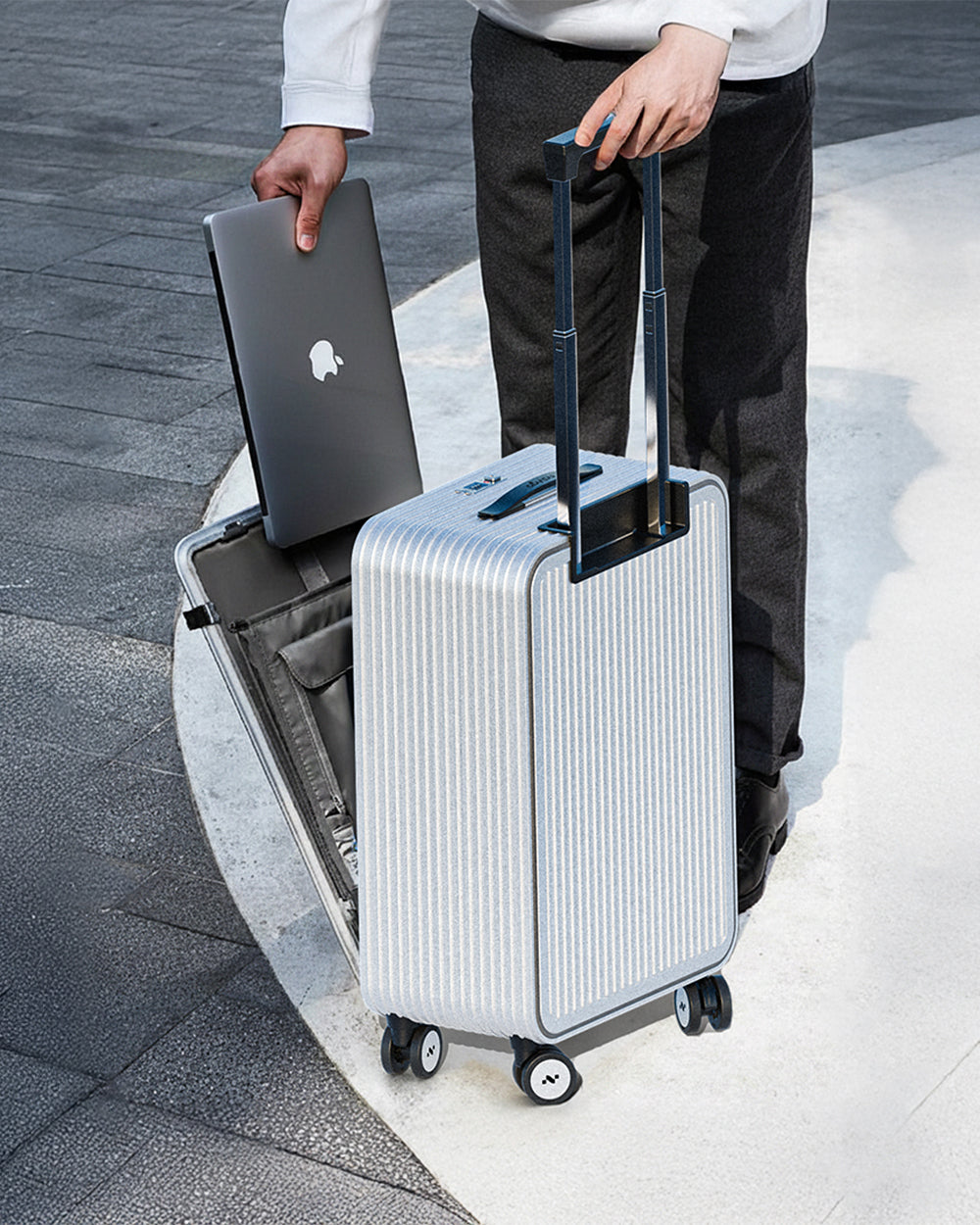
Take the Navigo Primo, for example. Its front-opening aluminium architecture allows travellers to access essentials without opening the entire suitcase, dramatically improving convenience during airport transitions or business travel.
These are not just design features, they are behavioural solutions. The best luxury luggage today is designed around real-world movement patterns:
-
Rushing through terminals
-
Accessing laptops quickly
-
Maximising cabin space
-
Navigating security checks
-
Reducing packing stress
-
Moving seamlessly between work and leisure
This is why modern premium luggage increasingly resembles thoughtful product design rather than conventional baggage manufacturing.
How to Choose the Best Premium Luggage in India
If you’re investing in luxury luggage, it helps to think beyond aesthetics alone.
The best premium luggage in India should combine performance, engineering, and longevity with strong visual identity.
Material quality should always come first. High-grade aluminium or premium polycarbonate dramatically changes durability, movement, and long-term performance. Wheel engineering matters equally. Cheap luggage often fails first at the wheels, while well-designed luggage glides effortlessly even after years of travel.
Internal organisation is another major differentiator. The best luggage doesn’t merely maximise space, it uses space intelligently. Features like compression systems, detachable organisers, spill-proof compartments, and easy-access storage dramatically improve travel efficiency.
Security also matters far more today, especially for frequent flyers. TSA-approved locks, anti-theft clasps, water-resistant sealing, and zipperless construction are increasingly becoming non-negotiable for premium travellers.
And finally, there’s the emotional aspect. The best suitcase is the one that genuinely feels aligned with the way you travel. Luxury luggage is ultimately a long-term relationship. You carry it through airports, hotels, cities, and milestones. The experience should feel seamless every single time.
Why Modern Luxury Travel Is Becoming More Intentional
Luxury travel is no longer about excess. It’s about reduction, about removing friction and moving more intelligently through the world.
This is exactly why thoughtfully engineered luggage has become such an important category for modern travellers. People increasingly want products that simplify movement rather than complicate it. They want elegance without noise, performance without bulk and design without unnecessary theatrics. The best premium luggage brands understand this shift deeply.
They recognise that travellers today are not simply buying suitcases. They are investing in smoother experiences, better mobility, and products that quietly elevate daily life.
Why Navigo Represents the Future of Premium Indian Luggage
A new generation of Indian brands is beginning to redefine what modern luxury can look like, especially in travel.
Navigo stands out because it approaches luggage through the lens of movement, architecture, and intelligent functionality. Whether it’s the aluminium precision of Primo, the streamlined sophistication of Streamliner, or the quiet elegance of Elite, the brand consistently focuses on products that feel engineered rather than manufactured.
The emphasis is not on loud branding, but on thoughtful details:
Front-opening accessibility
Silent wheel systems
Zipperless engineering
Refined interiors
Modern silhouettes
Elevated materials
In many ways, this reflects the evolution of luxury itself. Today’s travellers increasingly value products that integrate beautifully into their lives while performing exceptionally well behind the scenes.
That’s precisely where modern premium luggage is headed.
Explore the collection at Navigo
Frequently Asked Questions About Luxury Luggage
Is aluminium luggage better than polycarbonate luggage?
Both materials are premium, but they serve different travel needs. Aluminium luggage offers stronger structure, elevated aesthetics, and quiet luxury appeal, while polycarbonate luggage is lighter, more flexible, and better suited for frequent everyday travel.
Is hard shell luggage better for air travel?
Yes. Hard shell luggage generally offers better impact protection, improved security, and stronger durability, especially for frequent flyers.
Why is premium luggage more expensive?
Luxury luggage uses higher-grade materials, better wheel systems, stronger engineering, refined interiors, and more durable security mechanisms. The difference becomes noticeable over years of travel.
What is the best luggage material for frequent travellers?
Frequent travellers often prefer premium polycarbonate luggage because it is lightweight, durable, and easier for regular mobility. Aluminium luggage is ideal for travellers prioritising luxury, structure, and elevated design.
Does aluminium luggage dent easily?
Aluminium luggage can develop cosmetic dents over time, but this usually does not affect performance. Many travellers consider these marks part of the material’s character and travel story.