



Why Aluminum Luggage Is the Future of Sustainable Travel
We have become quite thoughtful about the footprint of travel. We carry reusable bottles, avoid unnecessary plastic, and make increasingly conscious choices about how we move around the world. Then, every few years, we replace the suitcase that carries it all.
That part of the journey deserves a closer look.
A suitcase travels with you through airports, hotels, road trips, work trips, long weekends, and the occasional holiday where you promised yourself you would pack light and then somehow returned with three times as many things. Unlike a disposable purchase, a good suitcase is meant to last. Which makes the material it is made from rather more important than it first appears.
This is where aluminum luggage becomes interesting. Aluminum has long been valued for its strength, durability, and versatility, but its sustainability story is equally compelling. The material can be recycled repeatedly without losing its fundamental properties, and recycled aluminum requires significantly less energy to produce than primary aluminum. According to the International Aluminum Institute, recycling aluminum can save around 95% of the energy required to produce primary aluminum.
In other words, aluminum isn't just having a moment because silver luggage looks exceptionally good in airport lighting. It has some very serious credentials behind the aesthetic.
The case for luggage lasts a lifetime

The easiest way to make a product more sustainable is often not to make it disappear. It is to make it last.
That idea is especially relevant for luggage. A suitcase that needs replacing every few years creates a very different environmental story from one designed to accompany you for much longer. The longer a product remains useful, the more journeys, memories, and airport breakfasts it can accommodate before another product needs to take its place.
Aluminum is naturally well suited to this idea of longevity. It is a strong material with a rigid structure, which is one reason it has found its way into everything from aircraft and automobiles to architecture and premium luggage. For travelers, that translates into something fairly simple: a suitcase designed to withstand the realities of travel.
And travel is not exactly a gentle hobby. Your suitcase will probably be rolled over pavements that were not designed with luggage wheels in mind, squeezed into car boots, lifted onto trains and sent down airport conveyor belts with considerably less ceremony than you would prefer. A material that can handle that kind of life has an obvious advantage.
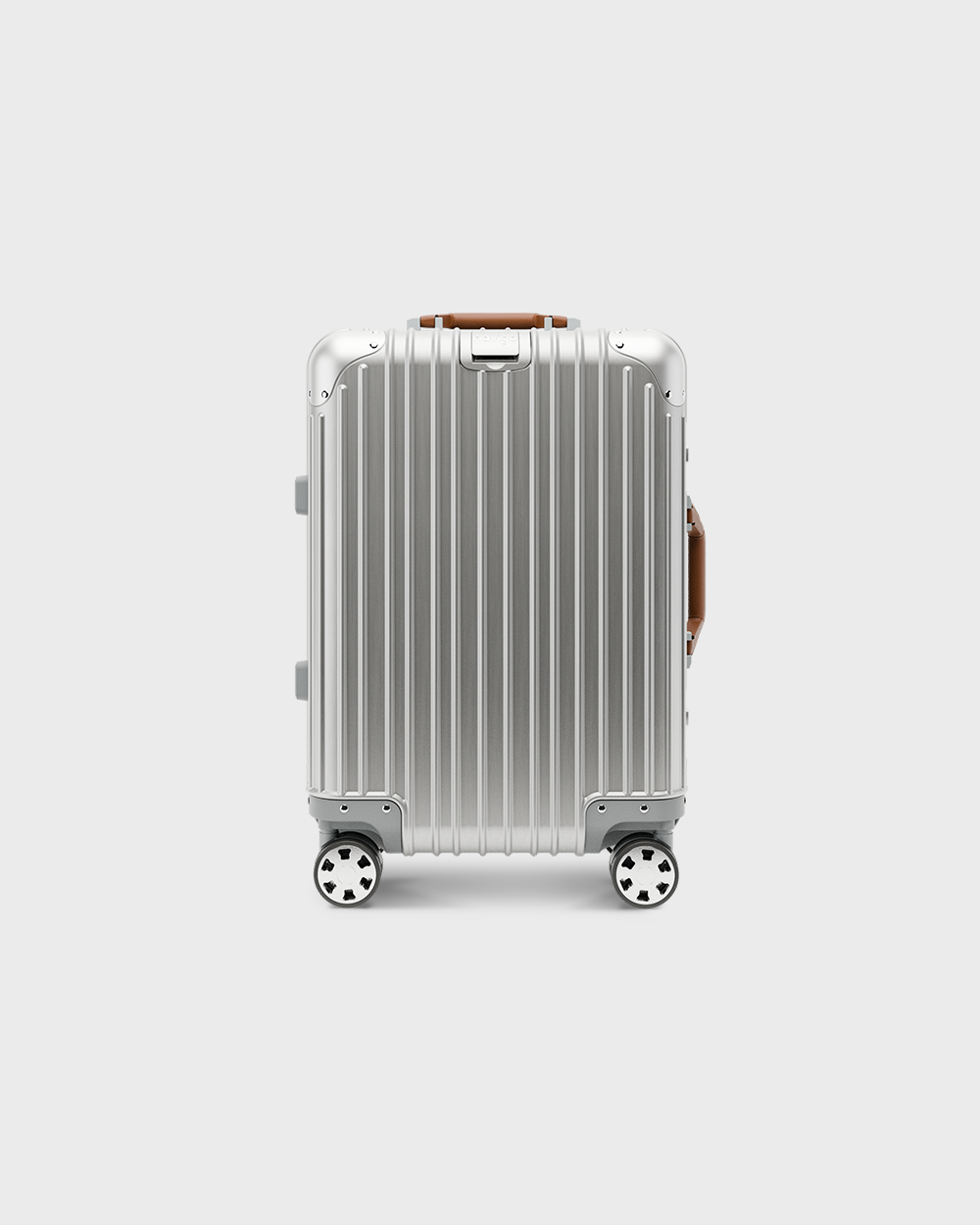
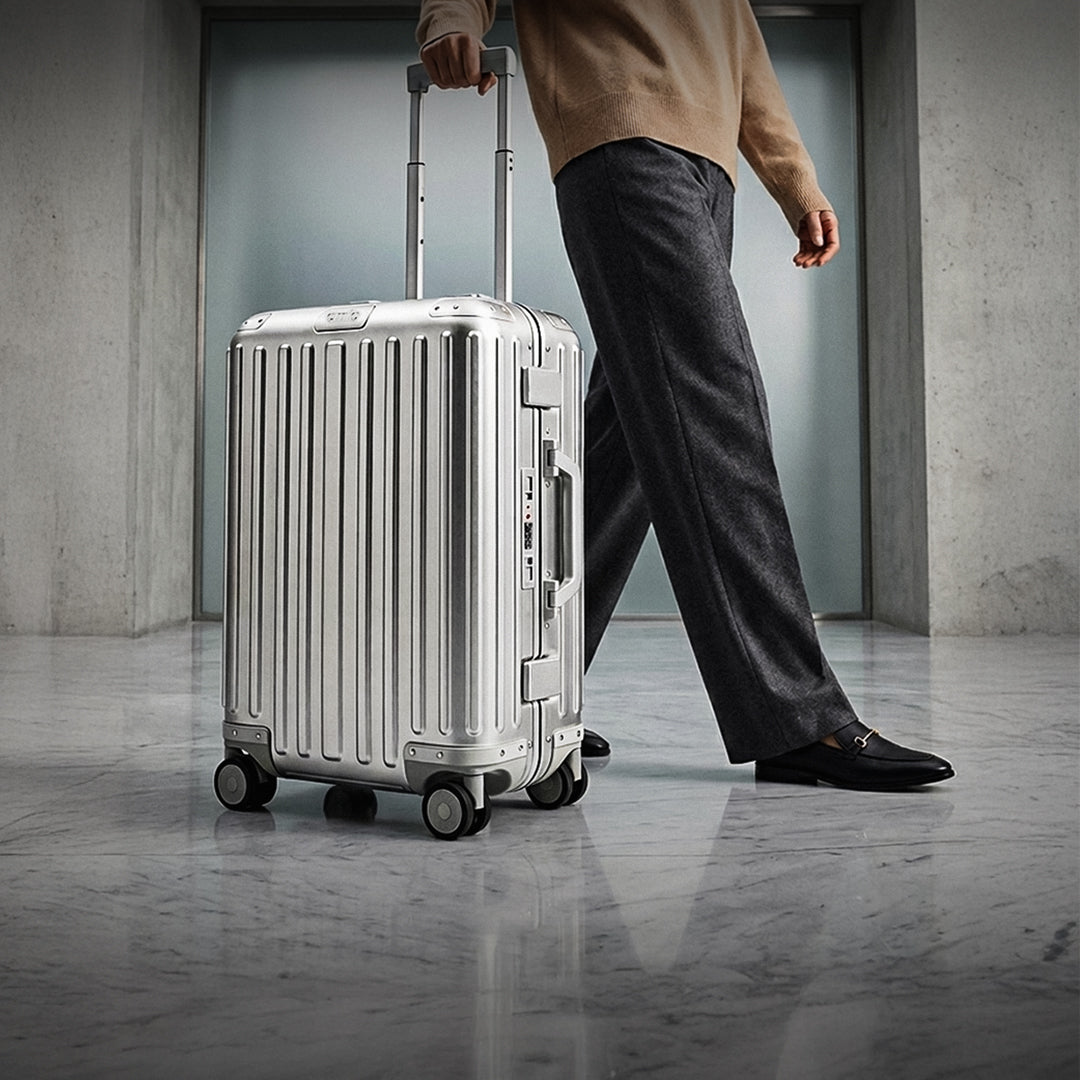
Navigo's aluminum collection brings that thinking to life in three distinct designs: Primo, ACE and Titan. Each has its own character, but all three are built around the idea that luggage can combine considered design with serious construction.
Aluminium: Infinitely Recyclable, Incredibly Durable
The more interesting part of aluminum's sustainability story begins when the suitcase's first life eventually ends.
Aluminum is highly recyclable and can be recycled repeatedly without fundamentally losing the properties that make it valuable. This means the material can move through multiple product lifecycles rather than simply becoming waste at the end of one. The International Aluminum Institute estimates that around 75% of all aluminum ever produced is still in use today.
That is an impressive statistic for a material that has been around for more than a century.
It also changes how we think about a suitcase. Your luggage does not necessarily have to have one identity forever. It can be your suitcase for ten years, and the aluminum itself can later become part of something else.
There is something reassuring about a material that does not believe in retirement.
Of course, recyclability alone does not make a product automatically sustainable. Aluminum production, particularly primary aluminum from raw materials, can be energy intensive. The environmental benefit depends on everything from how the aluminum is produced and sourced to how the finished product is used and what happens to it at the end of its life. Recycling is therefore an important part of the picture, not a magic word that makes the rest of the lifecycle disappear.
That distinction matters because sustainable design is ultimately about making better decisions across a product's entire lifecycle.
The beauty of letting things age
Another reason aluminum luggage has become a favorite among travelers who care about design is that it gets better at telling the truth. It gets better at telling the truth.
An aluminum suitcase can pick up scratches and dents over time. On paper, this might sound like a flaw. In practice, it can become part of the case's character. That mark on the corner might be from Paris. That scratch might be from the trip you took with your parents. That slightly battered edge may have survived more airports than some of your friendships.
There is a particular charm in a product that does not need to look brand new forever to remain desirable.
It is also a refreshing alternative to the idea that the only acceptable version of a premium product is the untouched one. Some things are allowed to acquire a history. A well-traveled aluminum suitcase can be one of them.

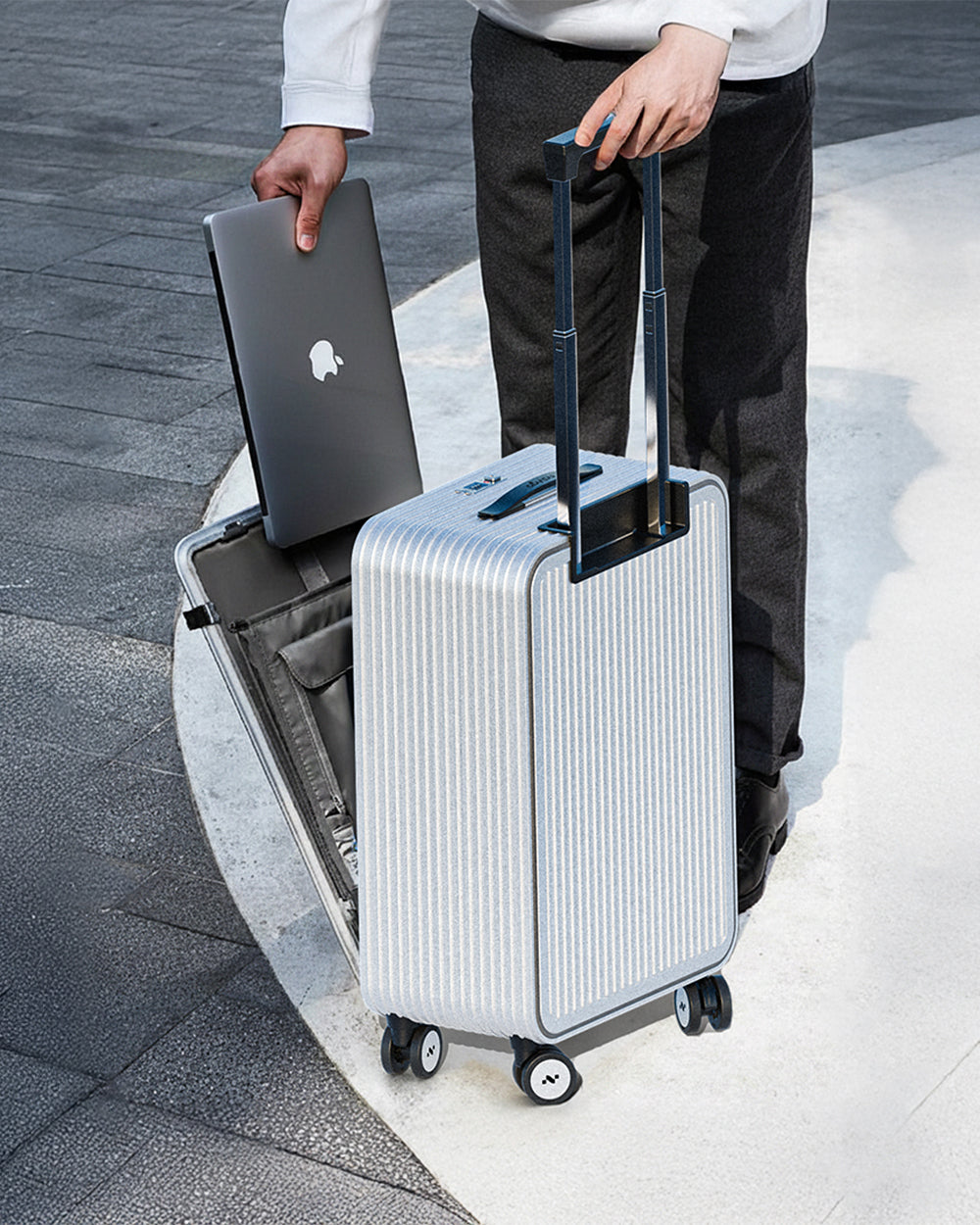
For Navigo, that makes aluminum particularly interesting because the material sits comfortably between engineering and aesthetics. Primo takes a refined approach to aluminum luggage, while ACE brings a more technical character with its 6 Series Aerospace Grade Aluminum construction, carbon-fiber-inspired texture, and front-opening design. Titan leans into the classic aluminum suitcase silhouette with a strong, structured build designed for frequent travel.

They have different personalities, but they share the same basic premise: the suitcase should be designed for the journey, not simply for the first photograph.
Sustainability does not have to look sustainable
For a long time, sustainable design had a particular visual language. There were earthy colors, recycled-paper textures, and enough leaves to make you wonder whether the product was secretly trying to photosynthesize. Thankfully, things have moved on.
The most interesting sustainable products today do not necessarily look like sustainable products. They simply make thoughtful decisions about materials, longevity, manufacturing, and use, then make the object itself good enough that you want to keep it.
Aluminum luggage fits neatly into that shift. It is clean, structured, and naturally premium-looking. The material itself becomes part of the aesthetic rather than something hidden underneath it. Navigo's Primo, ACE and Titan each approach that idea differently, but none requires the design to shout about sustainability to make the material choice interesting.
That is perhaps where sustainable travel is heading more broadly. Less performance, more permanence.
Before You Buy: Think Beyond the Material

Sustainability in luggage is not just about what the suitcase is made of. It is about how long you will use it, how well it suits the way you travel, how repairable/useful it remains, and what happens when you are finally done with it.
If you are choosing luggage with longevity in mind, look for:
A material that can take a beating.
Your suitcase is going to have a difficult life. Look for construction that is designed for repeated travel rather than simply looking pristine on day one. Aluminum's rigid structure makes it particularly suited to travelers who want something built for the long haul.
A design you won't outgrow.
This is the sustainability consideration nobody puts on the packaging. If your suitcase is so trend-driven that you want a new one next season, its theoretical longevity does not matter much. Choose a design you can imagine carrying five or ten years from now. Quietly good tends to age better than aggressively fashionable.
Features that actually change how you travel.
A suitcase can be beautifully engineered and still be annoying to live with. Consider how you pack, what you carry, and how often you travel.

Frequent business traveler? A front-opening cabin like ACE gives you quick access to your laptop and essentials without unpacking half your suitcase.
Prefer a more classic aluminum profile? Primo keeps things refined and straightforward.

Travel frequently and want something built around a more traditional hard-shell aluminum format? Titan is designed for that kind of mileage.

A finish you can live with.
This one sounds superficial until you realize how many suitcases get replaced because they no longer look “nice.” Aluminum has an advantage here: scratches and dents can become part of its character rather than an automatic reason to retire it. If you like your possessions to show a little evidence of having been places, this is a feature, not a bug.
A product you will keep using.
The most sustainable suitcase is not necessarily the one with the most impressive sustainability claims. It is the one that stays useful long enough to avoid unnecessary replacement. Think less about the marketing on the box and more about whether you can genuinely see yourself taking the same case through dozens of trips.
A material with somewhere to go afterward.
Finally, think about the end of the journey. Aluminum's recyclability gives the material the potential to remain valuable beyond the suitcase's life. That does not make every aluminum suitcase automatically sustainable, but it does make the material an interesting part of a longer circular lifecycle.
| If you care about | Look for |
| Longevity | Rigid, durable construction |
| Timelessness | A design you won't want to replace next season |
| Frequent travel | Strong wheels, handles and reinforced construction |
| Easy access | Front-opening or thoughtfully organized interiors |
| Character | Materials that age rather than simply deteriorate |
| End-of-life value | Materials with established recycling potential |
So, is aluminum luggage actually the future?
No single material can solve the environmental challenges of modern travel. Flying itself has a significant environmental footprint, and luggage is only one small part of the wider travel system.
But if we are going to buy luggage, there is a strong argument for choosing products designed to last, made from materials with genuine recycling potential, and built around a longer relationship with the person carrying them.
Aluminum has a particularly compelling combination of qualities. It is durable enough to travel well, recyclable enough to remain valuable beyond a single product, and refined enough that choosing it does not feel like a compromise.
That last part matters because sustainable travel should not mean buying something you secretly dislike just because the packaging told you it was responsible. It should mean making better choices that are also beautiful, functional, and genuinely enjoyable to use.
A good aluminum suitcase should survive years of airports, road trips, hotel lobbies, and the occasional conveyor-belt assault. It will collect a few scratches, perhaps a dent or two, and eventually develop the kind of patina that says, quite convincingly, “I have places to be.”
Aluminum luggage makes a rather compelling long-term travel companion. You buy it for one trip, then another, and another, until somewhere along the way it becomes the suitcase that has seen more of the world than you have.
Read more

Discover the travel essentials worth packing, from the right travel bag and tech to comfortable clothing, smart accessories and everyday must-haves.

Packing for a 3-day trip? Use this practical long-weekend packing list to pack light, avoid overpacking and fit everything you need into a cabin suitcase.
